C++ Programming Course
C++ is one of the most powerful, versatile and enduring programming languages in the technology industry — driving everything from game engines and operating systems to financial trading platforms and high-performance applications. Our C++ Programming course provides a comprehensive, structured learning path covering core C++ fundamentals, object-oriented programming, classes, inheritance, polymorphism, templates, the Standard Template Library, exception handling, file handling and dynamic memory management
- Recognized Certification
- Beginner Friendly Course
- Practical Computer Training
- Industry Expert Trainer
- Government Recognized Certification
- Beginner Friendly Course
- Practical Computer Training
- Industry Expert Trainer
About Course
From the operating systems running our computers to the game engines powering blockbuster titles, from high-frequency trading algorithms to embedded automotive systems — C++ is the language at the heart of the world’s most performance-critical software. As an extension of C with powerful object-oriented, generic and functional programming capabilities, C++ offers developers an unmatched combination of low-level control and high-level abstraction.
The C++ Programming course at Anubhav Computer Institute is a professionally structured, comprehensive program designed to take students and working professionals from the foundational principles of C++ all the way through to advanced concepts including object-oriented programming, templates, the Standard Template Library (STL), exception handling and dynamic memory management. Every concept is reinforced through practical, hands-on coding exercises and real-world programming projects that build both technical competence and strong object-oriented design thinking.
Mastering C++ equips learners with a deep, systems-level understanding of programming that makes them significantly more effective developers across any technology stack. Upon completion of this course, participants will possess a thorough, industry-relevant command of C++ Programming — making them highly competitive candidates for roles in software engineering, game development, embedded systems, financial technology and high-performance application development.
What You Will Learn
- Establish a strong C++ foundation with a comprehensive Introduction to C++ Programming
- Understand and apply all essential Data Types, Variables, Operators & Control Structures
- Design clean, modular programs using Functions, Recursion & Scope Management
- Master Object-Oriented Programming (OOP) — classes, objects, encapsulation & abstraction
- Implement powerful Inheritance & Polymorphism for flexible, extensible software design
- Work confidently with Constructors, Destructors & Operator Overloading
- Apply Templates & Generic Programming for reusable, type-independent code
- Leverage the Standard Template Library (STL) — vectors, maps, sets, stacks & queues
- Handle runtime errors gracefully using Exception Handling techniques
- Perform File Handling operations for persistent data storage and retrieval
- Manage memory efficiently using Dynamic Memory Management and smart pointers
Tools You Will Learn
Learn industry-relevant tools with practical training designed to make you confident, skilled, and job-ready.















C++ Programming Course Curriculum
This program covers important concepts and practical skills required for today’s digital world.
Module 1 — Introduction to C++ Programming
- Understanding the history and evolution of C++ and its relationship with C
- Overview of C++’s applications — game development, embedded systems, financial technology & more
- Understanding the key differences between C and C++ — procedural vs object-oriented paradigms
- Setting up the C++ development environment — GCC compiler, Code::Blocks and Visual Studio
- Understanding the structure of a C++ program — headers, namespaces, main function & statements
- Writing, compiling and executing your first C++ program from scratch
- Understanding C++ standards — C++11, C++14, C++17 and C++20 key features overview
Module 2 — Data Types, Variables, Operators & Control Structures
- Understanding fundamental data types in C++ — int, float, double, char, bool and string
- Declaring, initialising and using variables and constants in C++ programs
- Applying all categories of operators — arithmetic, relational, logical, bitwise and assignment
- Understanding type conversion — implicit conversion and explicit casting in C++
- Implementing conditional logic — if, if-else, nested if-else and switch statements
- Implementing loop structures — while, do-while and for loops for controlled iteration
- Using break, continue and return statements to manage program flow precisely
- Understanding the range-based for loop introduced in C++11 for cleaner iteration
Module 3 — Functions, Recursion & Scope Management
- Defining and calling functions — function declaration, definition and invocation in C++
- Understanding function parameters — pass by value, pass by reference and pass by pointer
- Using default arguments and function overloading for flexible function design
- Understanding inline functions for performance optimisation in C++
- Understanding variable scope — local, global and static variables in C++
- Implementing recursive functions — base case, recursive case and call stack management
- Solving classic problems using recursion — factorial, Fibonacci, tower of Hanoi & more
- Understanding lambda expressions introduced in C++11 for concise, inline function definitions
Module 4 — Object-Oriented Programming — Classes & Objects
- Understanding the four pillars of Object-Oriented Programming — encapsulation, abstraction, inheritance and polymorphism
- Defining classes and creating objects in C++ — the blueprint and instance relationship
- Understanding access specifiers — public, private and protected members
- Defining and implementing member functions inside and outside class definitions
- Understanding the this pointer and its role within class member functions
- Implementing encapsulation — using private data members with public getter and setter methods
- Understanding abstraction — hiding implementation details and exposing only necessary interfaces
- Real-world exercises — designing a Bank Account class, Student class and Employee class
Module 5 — Constructors, Destructors & Operator Overloading
- Understanding constructors — their purpose, types and automatic invocation
- Implementing default constructors, parameterised constructors and copy constructors
- Understanding constructor initialisation lists for efficient member variable initialisation
- Understanding destructors — their purpose, definition and automatic invocation on object destruction
- Understanding operator overloading — extending C++ operators to work with user-defined types
- Overloading arithmetic operators — +, -, *, / for custom class objects
- Overloading comparison operators — ==, !=, <, > for object comparison
- Overloading the stream insertion and extraction operators — << and >> for custom I/O
- Understanding friend functions and their role in operator overloading implementations
Module 6 — Inheritance & Polymorphism
- Understanding inheritance — the IS-A relationship and code reuse through class hierarchies
- Implementing single inheritance — derived classes inheriting from a single base class
- Implementing multilevel inheritance — chaining multiple levels of class derivation
- Implementing multiple inheritance — a derived class inheriting from two or more base classes
- Understanding the constructor and destructor execution order in inheritance hierarchies
- Understanding polymorphism — the ability of objects to take multiple forms at runtime
- Implementing compile-time polymorphism through function overloading and operator overloading
- Implementing runtime polymorphism using virtual functions and the virtual function table
- Understanding pure virtual functions and abstract classes for interface-based design
- Applying the override and final keywords introduced in C++11 for safer inheritance hierarchies
Module 7 — Templates & Generic Programming
- Understanding templates and their role in writing type-independent, reusable code
- Defining and using function templates for generic function implementations
- Defining and using class templates for generic data structure and container implementations
- Understanding template specialisation — providing specific implementations for particular types
- Understanding variadic templates introduced in C++11 for variable-argument generic functions
- Applying templates to build generic sorting, searching and data processing algorithms
- Understanding the relationship between templates and the Standard Template Library
- Real-world exercises — implementing a generic Stack, Queue and Pair class using templates
Module 8 — Standard Template Library (STL)
- Understanding the architecture of the STL — containers, iterators and algorithms
- Working with sequence containers — vector, list, deque and array
- Working with associative containers — map, multimap, set and multiset
- Working with container adaptors — stack, queue and priority queue
- Understanding and using iterators — input, output, forward, bidirectional and random access
- Applying STL algorithms — sort, find, count, reverse, transform and accumulate
- Using the string class and its comprehensive method library for professional string processing
- Understanding the pair and tuple utility classes for structured multi-value storage
- Real-world exercises — building inventory management and data processing programs using STL
Module 9 — Exception Handling
- Understanding exceptions and why robust error handling is essential in professional software
- Understanding C++’s exception handling mechanism — try, catch and throw
- Throwing and catching exceptions of different types — int, string and class objects
- Using multiple catch blocks to handle different exception types appropriately
- Understanding and using the standard exception hierarchy — std::exception and its derived classes
- Creating custom exception classes for domain-specific, meaningful error reporting
- Understanding stack unwinding and how C++ cleans up resources during exception propagation
- Using the noexcept specifier for functions guaranteed not to throw exceptions
- Best practices for designing robust, exception-safe C++ programs in production environments
Module 10 — File Handling & Dynamic Memory Management
- Understanding file handling in C++ using the fstream, ifstream and ofstream classes
- Opening, reading, writing and closing text files using C++ stream objects
- Working with binary files — reading and writing structured data using binary mode
- Using seekg, seekp, tellg and tellp for random access file navigation
- Understanding dynamic memory management in C++ using the new and delete operators
- Allocating and deallocating single objects and arrays on the heap
- Understanding smart pointers introduced in C++11 — unique_ptr, shared_ptr and weak_ptr
- Using smart pointers to eliminate memory leaks and dangling pointer issues automatically
- Understanding the Rule of Three and Rule of Five for safe resource management in classes
- Best practices for writing memory-safe, resource-efficient C++ programs in professional environments
Want Complete Details About the Course?
Get complete information about the Course
Key Highlights of the Course
Explore the important features and benefits that make the program a valuable certification for computer learning.
Government
Certification
Practical Lab
Training
Industy Expert
Trainer
Updated Course
Curriculum
Flexible Learning
Batches
Hands-on
Practice
Who Can Join & What You Will Gain
Discover who can enroll in this course, the benefits of learning, and the practical skills you will gain to grow your career.
- Who Can Join the Course
- Benefits of Learning the Course
- What Will You Gain
This course is designed for anyone who wants to build practical skills and improve their career opportunities. Whether you are a beginner or looking to upgrade your existing knowledge, this program is suitable for learners at different levels.
Students and freshers
Job seekers looking to gain skills
Working professionals wanting to upgrade
Business owners and entrepreneurs
Anyone interested in learning new skills
This course focuses on practical learning and skill development to help you grow professionally and stay competitive in today’s market.
Gain industry-relevant skills
Improve job and career opportunities
Build confidence with practical knowledge
Learn tools and techniques used in real work
Add value to your resume
By completing this course, you will develop the knowledge and practical skills required to perform tasks confidently in real-world scenarios.
Hands-on practical experience
Understanding of tools and technologies
Problem-solving and task execution skills
Industry-relevant knowledge
Confidence to work independently
Want Complete Details About the Course?
Get complete information about the Course
Start Your Learning Journey
Get started with a simple enrollment process and begin developing your skills with structured learning.

1. Fill the Enquiry Form
Submit your details through the website form to show your interest in the course.

2. Get Career Guidance
Our team will contact you to explain the course details, syllabus, batch timings, and answer your questions.

3. Enroll for Course
Confirm your seat by completing the registration process and submitting the required details.

4. Start Your Classes
Attend practical training sessions and begin learning essential computer and digital skills.
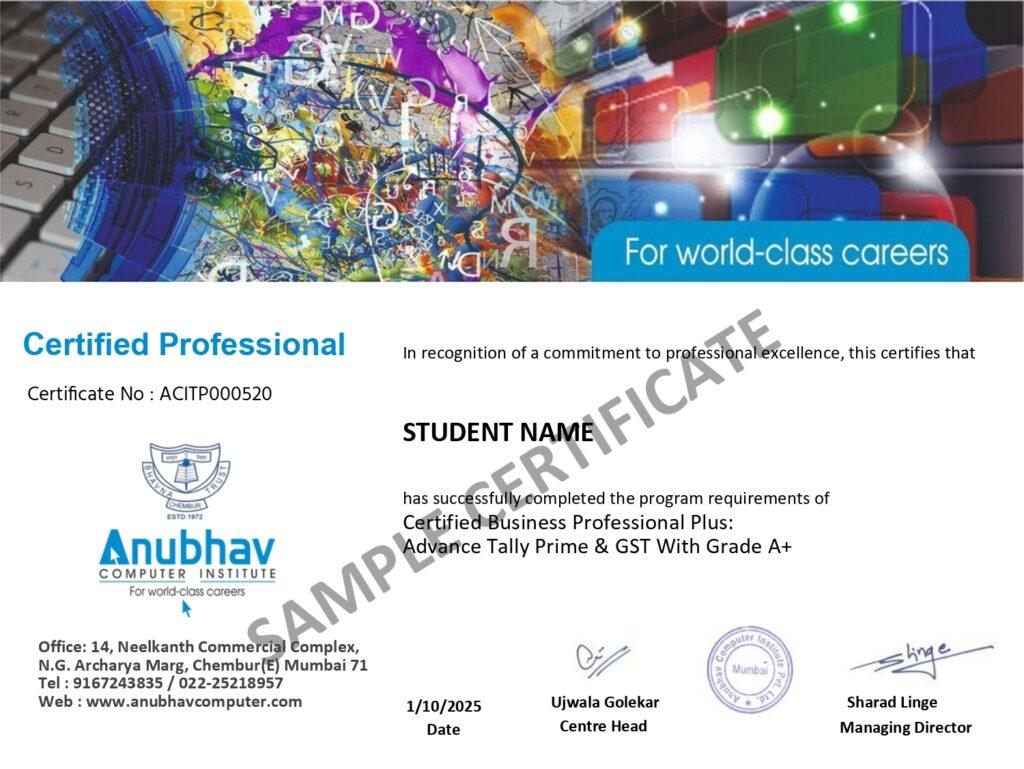
A Certification That Builds Digital Confidence
Earn the Recognized certification that validates your computer knowledge and digital skills required in today’s technology-driven world.
Industry Recognized Certification
Receive the Industry Recognized and a Trusted certification that demonstrates your ability to use computers and digital tools effectively.
Practical Computer Skills
The course is designed with a practical approach, enabling students to develop skills and gain experience using industry-relevant tools and techniques.
Valuable for Career Growth
The program follows a practical learning approach, enabling students to build strong skills and gain hands-on experience.