C Programming Course
C Programming is the foundational language that powers operating systems, embedded systems, hardware drivers and high-performance applications across the entire technology industry. Our C Programming course provides a comprehensive, structured learning path covering core programming concepts, data types, control structures, functions, arrays, pointers, strings, structures, file handling and dynamic memory management — all through practical, real-world coding exercises.
- Recognized Certification
- Beginner Friendly Course
- Practical Computer Training
- Industry Expert Trainer
- Government Recognized Certification
- Beginner Friendly Course
- Practical Computer Training
- Industry Expert Trainer
About Course
Every major programming language — Python, Java, C++, JavaScript and beyond — traces its roots back to C. As the language that powers operating systems like Linux and Windows, embedded systems, microcontrollers, hardware drivers and high-performance computing applications, C remains one of the most important, enduring and widely used programming languages in the history of technology.
The C Programming course at Anubhav Computer Institute is a professionally structured, comprehensive program designed to take students and working professionals from the very foundations of programming logic all the way through to advanced C concepts including pointers, dynamic memory management, file handling and data structures. Every concept is reinforced through practical, hands-on coding exercises and real-world programming challenges that build both technical competence and logical problem-solving ability.
Mastering C Programming gives learners a deep understanding of how computers actually work at the systems level — a knowledge base that makes them significantly more effective developers in any language or technology they work with subsequently. Upon completion of this course, participants will possess a thorough, industry-relevant command of C Programming — making them highly competitive candidates for roles in software development, embedded systems, systems programming and computer science research.
What You Will Learn
- Establish a strong programming foundation with a thorough Introduction to C Programming
- Understand and apply all essential Data Types, Variables & Operators in C
- Control program flow confidently using Control Structures — if, else, switch, loops & more
- Design modular, reusable programs using Functions & Recursion techniques
- Work with Arrays & Strings for efficient data storage and manipulation
- Master Pointers — one of C’s most powerful and distinctive features
- Design custom data types using Structures & Unions for complex data management
- Perform File Handling operations for persistent data storage and retrieval
- Manage memory efficiently using Dynamic Memory Allocation — malloc, calloc, realloc & free
- Apply Preprocessor Directives & Macros for flexible, maintainable code organisation
Tools You Will Learn
Learn industry-relevant tools with practical training designed to make you confident, skilled, and job-ready.















C Programming Course Curriculum
This program covers important concepts and practical skills required for today’s digital world.
Module 1 — Introduction to C Programming
- Understanding the history and evolution of C Programming and its significance in modern technology
- Overview of C’s applications — operating systems, embedded systems, hardware drivers & more
- Understanding the structure of a C program — headers, main function and statements
- Setting up the C development environment — installing GCC compiler, Code::Blocks and VS Code
- Writing, compiling and executing your first C program from scratch
- Understanding the compilation process — preprocessing, compiling, assembling and linking
- Overview of C standards — ANSI C, C89, C99 and C11 explained
Module 2 — Data Types, Variables & Operators
- Understanding fundamental data types in C — int, float, double, char and void
- Declaring, initialising and using variables in C programs
- Understanding constants — literal constants and symbolic constants using #define
- Applying arithmetic operators — addition, subtraction, multiplication, division and modulus
- Using relational operators for value comparison in conditional expressions
- Applying logical operators — AND, OR and NOT for compound conditional logic
- Understanding bitwise operators for low-level binary data manipulation
- Using the assignment operator, increment/decrement operators and the ternary operator
- Understanding operator precedence and associativity for correct expression evaluation
Module 3 — Control Structures
- Understanding the role of control structures in directing program execution flow
- Implementing conditional logic using if, if-else and nested if-else statements
- Using the switch statement for multi-branch conditional decision making
- Understanding and implementing the while loop for condition-based repetition
- Using the do-while loop for guaranteed first-execution iteration scenarios
- Implementing the for loop for count-controlled, structured repetition
- Applying break and continue statements to control loop execution precisely
- Using the goto statement — understanding its use and the reasons for avoiding it
- Designing nested loops for matrix processing, pattern generation and multi-level iteration
Module 4 — Functions & Recursion
- Understanding the purpose and benefits of functions in modular program design
- Defining and calling functions — function declaration, definition and invocation
- Understanding function parameters — pass by value and pass by reference
- Working with return types — returning values from functions correctly
- Understanding the scope of variables — local, global and static variables explained
- Using storage class specifiers — auto, register, static and extern
- Understanding and implementing recursive functions — base case and recursive case
- Solving classic problems using recursion — factorial, Fibonacci and binary search
- Understanding the function call stack and how recursion uses memory
Module 5 — Arrays & Strings
- Understanding arrays — declaration, initialisation and accessing array elements
- Working with one-dimensional arrays for linear data storage and processing
- Implementing two-dimensional arrays for matrix representation and operations
- Passing arrays to functions for modular array processing
- Understanding strings in C — character arrays and null-terminated string representation
- Using standard string library functions — strlen, strcpy, strcat, strcmp and more
- Implementing string manipulation programs — reversing, searching and sorting strings
- Working with arrays of strings for multi-string data management
- Real-world exercises — sorting algorithms, matrix operations and string processing programs
Module 6 — Pointers
- Understanding what pointers are and why they are one of C’s most powerful features
- Declaring pointer variables and using the address-of (&) and dereference (*) operators
- Understanding the relationship between pointers and arrays in C
- Using pointer arithmetic — incrementing, decrementing and comparing pointers
- Passing pointers to functions for pass-by-reference behaviour and efficient data handling
- Understanding pointers to pointers — double pointers and their applications
- Working with function pointers for callback functions and flexible program design
- Understanding null pointers, void pointers and dangling pointers — risks and best practices
- Real-world exercises — implementing linked list operations and dynamic array management
Module 7 — Structures & Unions
- Understanding structures — defining, declaring and initialising structure variables
- Accessing structure members using the dot operator and arrow operator
- Using structures as function parameters and return types
- Creating arrays of structures for managing collections of related data records
- Understanding nested structures for representing complex, hierarchical data relationships
- Using typedef for creating cleaner, more readable custom type aliases
- Understanding unions — definition, declaration and key differences from structures
- Practical applications of unions for memory-efficient data representation
- Real-world exercises — building a student record system and employee management program
Module 8 — File Handling
- Understanding the need for file handling in C for persistent data storage
- Understanding file types in C — text files and binary files
- Opening and closing files using fopen and fclose with appropriate file modes
- Reading from text files using fscanf, fgets and fgetc functions
- Writing to text files using fprintf, fputs and fputc functions
- Working with binary files — fread and fwrite for structured data storage
- Using fseek, ftell and rewind for random access file navigation
- Understanding and handling file errors using ferror and feof functions
- Real-world exercises — building a file-based student record storage and retrieval system
Module 9 — Dynamic Memory Management
- Understanding static vs dynamic memory allocation and when each is appropriate
- Using malloc for allocating a specified number of bytes at runtime
- Using calloc for allocating and zero-initialising memory for arrays
- Using realloc for resizing previously allocated memory blocks
- Using free to release dynamically allocated memory and prevent memory leaks
- Understanding common memory management errors — memory leaks, dangling pointers and buffer overflows
- Best practices for writing memory-safe C programs in production environments
- Implementing dynamic arrays and linked lists using dynamic memory allocation
- Real-world exercises — building a dynamic student database using heap memory management
Module 10 — Preprocessor Directives & Macros
- Understanding the C preprocessor and its role in the compilation pipeline
- Using the #include directive for incorporating header files into programs
- Defining and using symbolic constants with the #define directive
- Writing function-like macros for reusable, inline code substitution
- Understanding the risks and limitations of macros vs inline functions
- Using conditional compilation directives — #ifdef, #ifndef, #if, #else and #endif
- Using #pragma directives for compiler-specific instructions and optimisations
- Creating and using custom header files for modular, multi-file C programs
- Best practices for using the preprocessor responsibly in professional C development
Want Complete Details About the Course?
Get complete information about the Course
Key Highlights of the Course
Explore the important features and benefits that make the program a valuable certification for computer learning.
Government
Certification
Practical Lab
Training
Industy Expert
Trainer
Updated Course
Curriculum
Flexible Learning
Batches
Hands-on
Practice
Who Can Join & What You Will Gain
Discover who can enroll in this course, the benefits of learning, and the practical skills you will gain to grow your career.
- Who Can Join the Course
- Benefits of Learning the Course
- What Will You Gain
This course is designed for anyone who wants to build practical skills and improve their career opportunities. Whether you are a beginner or looking to upgrade your existing knowledge, this program is suitable for learners at different levels.
Students and freshers
Job seekers looking to gain skills
Working professionals wanting to upgrade
Business owners and entrepreneurs
Anyone interested in learning new skills
This course focuses on practical learning and skill development to help you grow professionally and stay competitive in today’s market.
Gain industry-relevant skills
Improve job and career opportunities
Build confidence with practical knowledge
Learn tools and techniques used in real work
Add value to your resume
By completing this course, you will develop the knowledge and practical skills required to perform tasks confidently in real-world scenarios.
Hands-on practical experience
Understanding of tools and technologies
Problem-solving and task execution skills
Industry-relevant knowledge
Confidence to work independently
Want Complete Details About the Course?
Get complete information about the Course
Start Your Learning Journey
Get started with a simple enrollment process and begin developing your skills with structured learning.

1. Fill the Enquiry Form
Submit your details through the website form to show your interest in the course.

2. Get Career Guidance
Our team will contact you to explain the course details, syllabus, batch timings, and answer your questions.

3. Enroll for Course
Confirm your seat by completing the registration process and submitting the required details.

4. Start Your Classes
Attend practical training sessions and begin learning essential computer and digital skills.
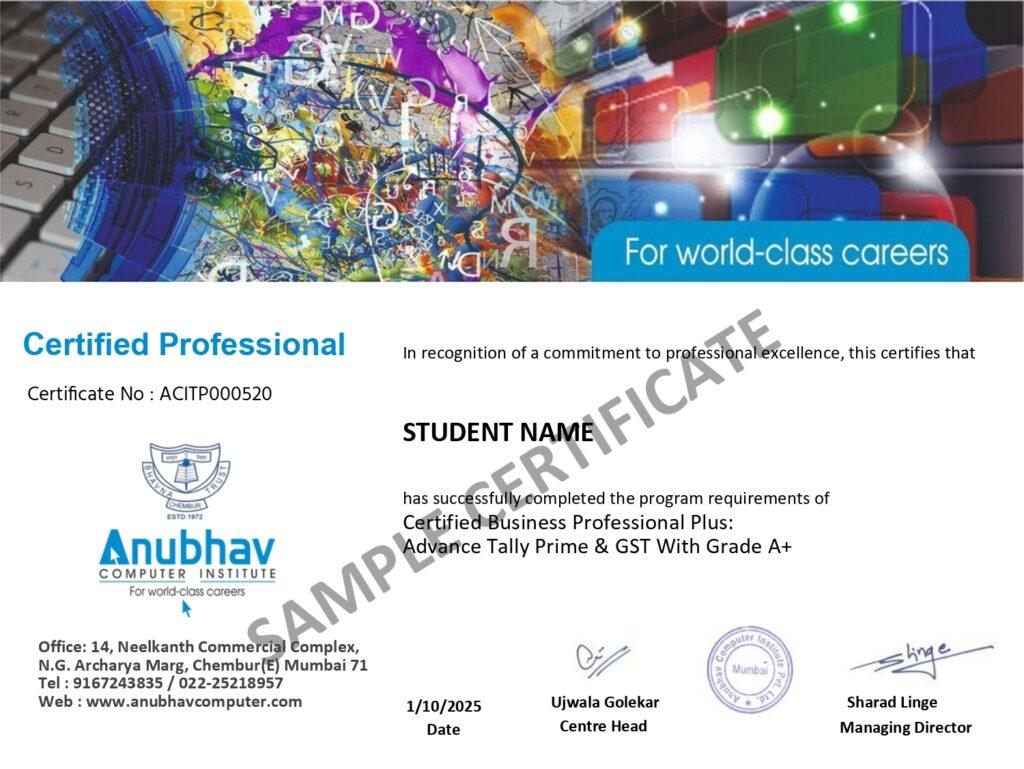
A Certification That Builds Digital Confidence
Earn the Recognized certification that validates your computer knowledge and digital skills required in today’s technology-driven world.
Industry Recognized Certification
Receive the Industry Recognized and a Trusted certification that demonstrates your ability to use computers and digital tools effectively.
Practical Computer Skills
The course is designed with a practical approach, enabling students to develop skills and gain experience using industry-relevant tools and techniques.
Valuable for Career Growth
The program follows a practical learning approach, enabling students to build strong skills and gain hands-on experience.