SQL – Database Mastery Course
In today’s data-driven world, SQL is one of the most essential and widely sought-after skills across every industry. Our SQL — Database Mastery course provides a comprehensive, structured learning path covering database fundamentals, CRUD operations, aggregate functions, joins, subqueries, views, indexes and data partitioning — all through practical, real-world exercises.
- Recognized Certification
- Beginner Friendly Course
- Practical Computer Training
- Industry Expert Trainer
- Government Recognized Certification
- Beginner Friendly Course
- Practical Computer Training
- Industry Expert Trainer

About Course
In an era where data is the most valuable asset for organisations of all sizes, the ability to manage, query and analyse data effectively is a skill that sets professionals apart. SQL (Structured Query Language) is the universal language of databases — used by developers, data analysts, business intelligence professionals and system administrators across virtually every industry worldwide.
The SQL — Database Mastery course at Anubhav Computer Institute is a comprehensive, professionally structured program designed to take students and working professionals from the foundational principles of databases all the way through to advanced SQL techniques including views, indexes, subqueries and data partitioning. Every concept is reinforced through practical, hands-on exercises that mirror real-world database challenges, ensuring that learners are fully prepared to apply their skills in a professional environment from day one.
Upon completion of this course, participants will possess a thorough, industry-relevant understanding of SQL and relational database management — making them highly competitive candidates for roles in data analysis, software development, business intelligence and database administration.
What You Will Learn
- Understand the Fundamentals of SQL & Data and how relational databases are structured
- Perform complete CRUD Operations — Create, Read, Update and Delete data with precision
- Maintain Data Integrity through constraints, keys and referential integrity rules
- Master Retrieval & Documentation techniques for accurate and efficient data access
- Apply Aggregate Functions — SUM, COUNT, AVG, MIN and MAX for data summarisation
- Work with Joins and Constraints to combine data across multiple related tables
- Design and implement ER Models for professional database planning and documentation
- Write complex Query Statements with Joins & Aggregates for advanced data retrieval
- Use Case Statements to apply conditional logic within SQL queries
- Develop powerful Subqueries for dynamic and nested data retrieval operations
- Apply Date Manipulation & Functions for time-based data analysis and reporting
- Implement Views, Indexes & Data Partitioning for optimised database performance
Tools You Will Learn
Learn industry-relevant tools with practical training designed to make you confident, skilled, and job-ready.















SQL Database Course Curriculum
This program covers important concepts and practical skills required for today’s digital world.
Module 1 : Fundamentals of SQL & Data
- Understanding what a database is and why it is essential for modern organisations
- Introduction to Relational Database Management Systems (RDBMS)
- Understanding tables, rows, columns, primary keys and foreign keys
- Overview of SQL and its role as the standard language for relational databases
- Understanding different categories of SQL commands — DDL, DML, DCL and TCL
- Setting up the SQL development environment — MySQL / SQL Server installation and configuration
- Writing and executing your first SQL queries from scratch
Module 2: CRUD Operations & Data Integrity
- Creating database tables using the CREATE TABLE statement with appropriate data types
- Inserting records into tables using the INSERT INTO statement
- Retrieving data using the SELECT statement with various filtering options
- Updating existing records accurately using the UPDATE statement
- Deleting records safely using the DELETE and TRUNCATE statements
- Implementing data integrity constraints — PRIMARY KEY, FOREIGN KEY, UNIQUE, NOT NULL and CHECK
- Understanding referential integrity and how it maintains consistency across related tables
Module 3 : Retrieval & Documentation
- Writing precise SELECT queries with WHERE clauses for filtered data retrieval
- Using comparison operators, logical operators and wildcards in queries
- Sorting query results using ORDER BY — ascending and descending order
- Limiting query results using TOP, LIMIT and FETCH NEXT clauses
- Using DISTINCT to eliminate duplicate records from query results
- Aliasing columns and tables for cleaner, more readable query output
- Documenting SQL queries with comments for professional code maintainability
Module 4: Aggregate Functions
- Understanding aggregate functions and their role in data summarisation
- Using SUM to calculate total values across a dataset
- Using COUNT and COUNTA to count records and non-null values
- Using AVG, MIN and MAX for statistical data analysis
- Grouping data using the GROUP BY clause for category-level analysis
- Filtering grouped results using the HAVING clause
- Combining aggregate functions with joins for multi-table data summarisation
Module 5: Joins, Constraints & ER Modelling
- Understanding why joins are fundamental to relational database querying
- Using INNER JOIN to retrieve matching records from two or more tables
- Using LEFT JOIN and RIGHT JOIN for inclusive data retrieval
- Using FULL OUTER JOIN to retrieve all records from both tables
- Applying CROSS JOIN and SELF JOIN for specialised query requirements
- Understanding and implementing entity-relationship (ER) diagrams for database design
- Translating ER models into properly normalised relational database structures
Module 6 : Query Writing with Joins & Aggregates
- Combining JOIN operations with aggregate functions for complex data analysis
- Writing multi-table queries that summarise and group data simultaneously
- Using nested aggregates for advanced business reporting requirements
- Building queries that span three or more related tables efficiently
- Optimising multi-table queries for better performance and readability
- Real-world exercises — generating sales reports, inventory summaries and financial analyses
- Best practices for writing clean, efficient and well-structured SQL queries
Module 7: Case Statements for Conditional Logic
- Understanding the CASE statement and its role in conditional data transformation
- Writing simple CASE expressions for straightforward value mapping
- Writing searched CASE expressions for complex, multi-condition logic
- Using CASE statements within SELECT queries for dynamic column generation
- Combining CASE statements with aggregate functions for conditional summarisation
- Applying CASE logic in ORDER BY and WHERE clauses for advanced query control
- Real-world use cases — categorising customers, flagging records and generating status labels
Module 8: Case Statements for Conditional LogicSubqueries for Dynamic Retrieval
- Understanding what subqueries are and when to use them effectively
- Writing single-row subqueries for precise filtered data retrieval
- Using multi-row subqueries with IN, ANY and ALL operators
- Understanding correlated subqueries and how they reference the outer query
- Using subqueries within SELECT, FROM and WHERE clauses
- Understanding the difference between subqueries and joins — when to use each
- Real-world exercises — finding top performers, identifying outliers and dynamic filtering
Module 9: Date Manipulation & Functions
- Understanding date and time data types in SQL databases
- Using GETDATE(), NOW() and CURRENT_DATE for retrieving the current date and time
- Calculating date differences using DATEDIFF for age, duration and timeline analysis
- Adding and subtracting time intervals using DATEADD and date arithmetic
- Extracting specific date parts — year, month, day, hour and minute — from date values
- Formatting date values for professional reporting using FORMAT and CONVERT functions
- Real-world exercises — calculating employee tenure, order aging and date-based filtering
Module 10: Date Manipulation & FunctionsViews, Indexes & Data Partitioning
- Understanding database views and their role in simplifying complex queries
- Creating, modifying and dropping views for reusable query abstraction
- Understanding indexed views for enhanced query performance
- Introduction to database indexes — clustered and non-clustered indexes explained
- Creating and managing indexes to optimise query execution speed
- Understanding the trade-offs between index performance and storage overhead
- Introduction to data partitioning — horizontal and vertical partitioning strategies
- Implementing table partitioning for managing and querying large-scale datasets efficiently
- Best practices for maintaining and optimising a production-level SQL database
Want Complete Details About the Course?
Get complete information about the Course
Key Highlights of the Course
Explore the important features and benefits that make the program a valuable certification for computer learning.
Government
Certification
Practical Lab
Training
Industy Expert
Trainer
Updated Course
Curriculum
Flexible Learning
Batches
Hands-on
Practice
Who Can Join & What You Will Gain
Discover who can enroll in this course, the benefits of learning, and the practical skills you will gain to grow your career.
- Who Can Join the Course
- Benefits of Learning the Course
- What Will You Gain
This course is designed for anyone who wants to build practical skills and improve their career opportunities. Whether you are a beginner or looking to upgrade your existing knowledge, this program is suitable for learners at different levels.
Students and freshers
Job seekers looking to gain skills
Working professionals wanting to upgrade
Business owners and entrepreneurs
Anyone interested in learning new skills
This course focuses on practical learning and skill development to help you grow professionally and stay competitive in today’s market.
Gain industry-relevant skills
Improve job and career opportunities
Build confidence with practical knowledge
Learn tools and techniques used in real work
Add value to your resume
By completing this course, you will develop the knowledge and practical skills required to perform tasks confidently in real-world scenarios.
Hands-on practical experience
Understanding of tools and technologies
Problem-solving and task execution skills
Industry-relevant knowledge
Confidence to work independently
Want Complete Details About the Course?
Get complete information about the Course
Start Your Learning Journey
Get started with a simple enrollment process and begin developing your skills with structured learning.

1. Fill the Enquiry Form
Submit your details through the website form to show your interest in the course.

2. Get Career Guidance
Our team will contact you to explain the course details, syllabus, batch timings, and answer your questions.

3. Enroll for Course
Confirm your seat by completing the registration process and submitting the required details.

4. Start Your Classes
Attend practical training sessions and begin learning essential computer and digital skills.
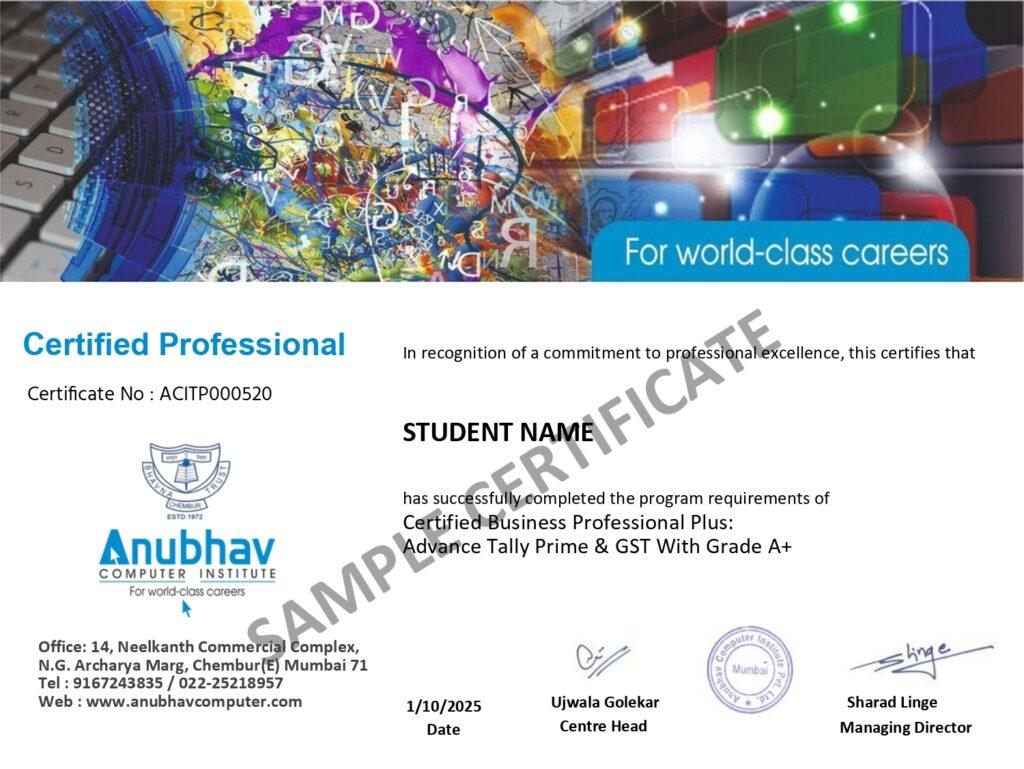
A Certification That Builds Digital Confidence
Earn the Recognized certification that validates your computer knowledge and digital skills required in today’s technology-driven world.
Industry Recognized Certification
Receive the Industry Recognized and a Trusted certification that demonstrates your ability to use computers and digital tools effectively.
Practical Computer Skills
The course is designed with a practical approach, enabling students to develop skills and gain experience using industry-relevant tools and techniques.
Valuable for Career Growth
The program follows a practical learning approach, enabling students to build strong skills and gain hands-on experience.