Python vs C++ for First Job: Which Programming Language Should Beginners Choose?
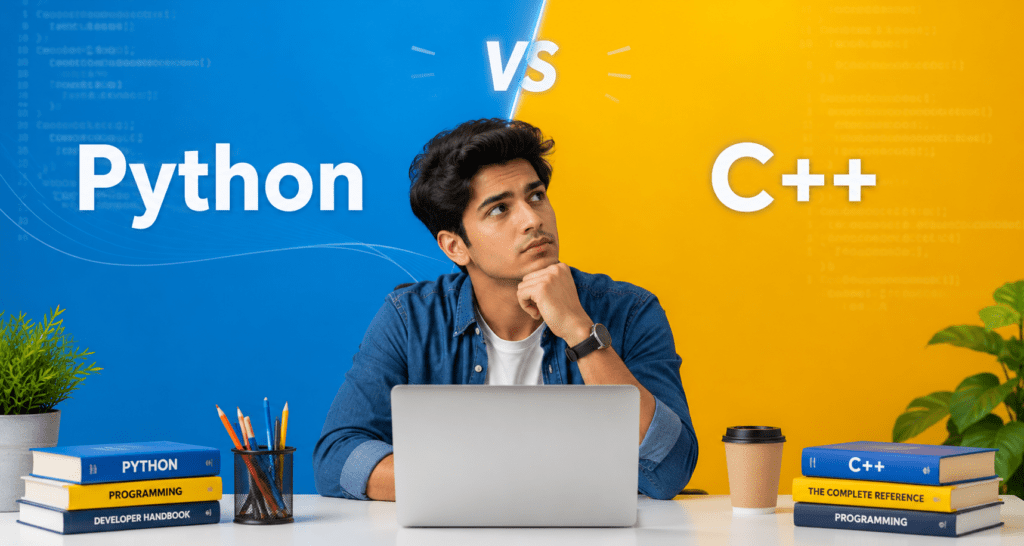
Python vs C++ for First Job is one of the most common questions asked by aspiring programmers. Both the Python programming language and the C++ programming language are powerful, widely used, and offer excellent career opportunities across industries. However, choosing between Python vs C++ can be confusing because each language has different strengths, learning styles, and job applications. If you’re wondering Which is better Python or C++ or searching for the best programming language for beginners, understanding their differences is the first step toward making the right career choice.
What is Python & C++?
What is Python?
Python is a high-level, interpreted Python programming language known for its simple syntax and excellent readability. Created by Guido van Rossum and first released in 1991, it is an open-source, cross-platform language used for web development, automation, data science, artificial intelligence, and more. Beginners love Python because it is easy to learn, requires less code, and has a large, supportive community.
Key Features of Python
- Easy Syntax: Simple, beginner-friendly syntax that is quick to learn.
- Readable Code: Clean code structure improves understanding and maintenance.
- Large Community: Extensive documentation, tutorials, and community support.
- Cross-Platform: Runs on Windows, macOS, and Linux without major changes.
- Open Source: Free to use, modify, and distribute with continuous community-driven improvements.
What is C++?
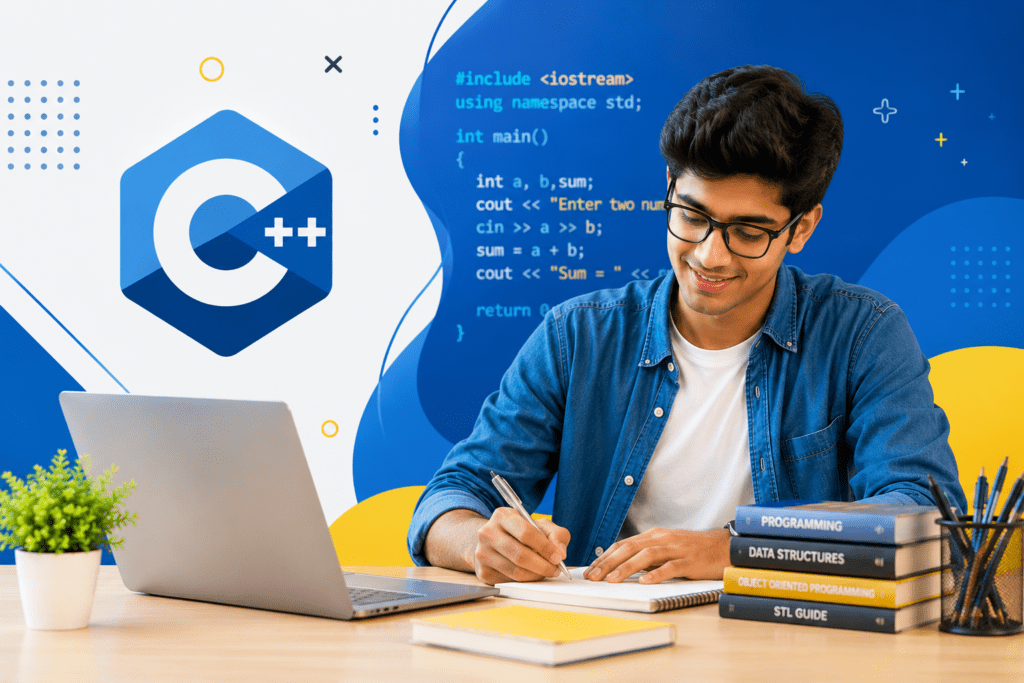
C++ is a powerful, high-performance C++ programming language developed by Bjarne Stroustrup in 1985 as an extension of the C language. It remains popular because of its speed, efficiency, and versatility. C++ is widely used in game development, system software, embedded systems, operating systems, and performance-critical applications where maximum control over hardware and memory is essential.
Key Features of C++
- High Performance: Delivers fast and efficient program execution.
- Object-Oriented Programming: Supports classes, objects, inheritance, and polymorphism.
- Memory Management: Provides direct control over memory allocation and deallocation.
- Fast Execution: Compiled code runs quickly with minimal overhead.
- System Programming: Ideal for developing operating systems, drivers, and embedded software.
Python vs C++ at a Glance
| Feature | Python | C++ |
|---|---|---|
| Learning Difficulty | Easy | Moderate to Difficult |
| Syntax | Simple & Readable | Complex |
| Performance | Moderate | Very High |
| Speed | Slower | Faster |
| Memory Usage | Higher | Lower |
| Best For | AI, Web, Automation | Game Development, Systems |
| Job Opportunities | Excellent | Excellent |
| Salary Potential | High | High |
| Beginner Friendly | ★★★★★ | ★★★☆☆ |
| Overall Recommendation | Best for Beginners | Best for Performance |

Python vs C++ for First Job: Which Programming Language Has More Job Opportunities?
When comparing Python vs C++ for First Job, both languages offer excellent career prospects, but the opportunities vary depending on the industry and role. If you’re exploring Python vs C++ for beginners or wondering Python or C++ which is better, understanding where each language is in demand can help you make the right career decision. Here’s a comparison across different job sectors.
- Startup Demand
Startups prefer Python because it enables rapid development, faster testing, and quicker product launches. It is widely used for web applications, automation, and AI-based products. C++ is less common in startups unless they build performance-intensive software.
- IT Companies
Most IT service companies hire Python developers for web development, cloud computing, automation, and backend projects. C++ developers are primarily recruited for enterprise software, embedded systems, networking, and performance-critical applications. Both languages provide strong Python vs C++ career opportunities.
- Product Companies
Leading product-based companies recruit Python developers for backend engineering, Python vs C++ for AI and machine learning, and Python vs C++ for data science roles. C++ remains the preferred choice for system software, browsers, databases, and high-performance applications where Python vs C++ performance becomes a deciding factor.
- Government Jobs
Government organizations and public sector companies often use C++ for defense, embedded systems, research, and technical projects. Python is increasingly adopted for automation, cybersecurity, and data analytics, although C++ continues to have an advantage in system-level development.
- Freelancing
Python offers significantly more freelancing opportunities because businesses frequently need websites, automation scripts, APIs, data analysis, and AI solutions. C++ freelance work is available but is generally limited to specialized software, desktop applications, and embedded programming.
- Remote Work
Python dominates remote hiring due to its popularity in web development, cloud services, AI, and automation. C++ remote positions are available mainly for experienced developers working on game engines, financial systems, or infrastructure software.
- Final Verdict
In the overall Python vs C++ comparison, Python provides broader opportunities for beginners, especially in startups, freelancing, remote work, and modern software development. C++ remains an excellent choice for Python vs C++ for game development, Python vs C++ for competitive programming, embedded systems, and high-performance software. When considering the Difference between Python and C++, Python offers an easier Python vs C++ learning curve, while C++ delivers superior execution speed. Your decision should depend on your career goals, preferred domain, and whether you’re aiming for Python vs C++ for software development, AI, or system programming. Both languages also offer competitive Python vs C++ salary packages with strong long-term growth.
Python vs C++ Learning Curve
When comparing the Python vs C++ learning curve, Python is generally easier for beginners because of its simple syntax and readable code. C++ takes longer to master due to concepts like pointers, memory management, and object-oriented programming. If you’re deciding Python vs C++ for First Job, understanding the learning process can help you choose the right language.
- Time Required: Most beginners can learn Python basics in 1–3 months, while C++ often requires 3–6 months to build a solid foundation.
- Difficulty Level: In Python vs C++ for beginners, Python is easier, whereas C++ has a steeper learning curve because of its advanced programming concepts.
- Practice Needed: Python focuses on problem-solving and application development, while C++ requires additional practice with memory management and optimization, influencing Python vs C++ performance.
- Resources Available: Both languages have excellent tutorials, documentation, online courses, and coding communities. Python, however, offers more beginner-friendly resources and projects. Whether you’re evaluating Python or C++ which is better, your choice should depend on your career goals and interests.
Should You Learn Python or C++ First?
If you’re confused about Python vs C++ for First Job, the right choice depends on your career goals and interests. The Difference between Python and C++ lies in their learning approach, applications, and performance. Here’s a simple guide to help you decide.
Choose Python If:
- You are a complete beginner and want an easier Python vs C++ learning curve.
- You want to become job-ready quickly with modern development skills.
- You are interested in Python vs C++ for AI and machine learning or Python vs C++ for data science.
- You want to build automation scripts or web applications.
- You prefer faster development with simple Python vs C++ syntax.
Choose C++ If
- You want to master core programming concepts and fundamentals.
- You are interested in Python vs C++ for game development.
- You want a career in embedded systems or system programming.
- You enjoy logical thinking and Python vs C++ for competitive programming.
- You want high-speed applications where Python vs C++ performance is critical.
Can You Learn Both Python and C++?
Yes, learning both languages is a smart long-term strategy. If you’re comparing Python vs C++ for First Job, you don’t have to choose only one forever. Each language offers unique strengths, and together they can expand your career opportunities.
- Benefits of Learning Both: Python is ideal for web development, automation, AI, and data science, while C++ excels in system programming, game development, and high-performance applications. Understanding the Difference between Python and C++ helps you become a more versatile developer.
- Recommended Learning Order: For Python vs C++ for beginners, start with Python because of its simpler syntax and easier Python vs C++ learning curve. Once you understand programming fundamentals, move to C++.
- Career Advantages: Knowing both languages improves your Python vs C++ career opportunities, allows you to work on diverse projects, and makes your resume stronger. It also opens doors to software development, AI, embedded systems, and performance-focused programming roles, giving you greater flexibility in the job market.
Frequently Asked Questions
1. Is Python easier than C++?
2. Which language is better for getting a first job?
3. Can I learn Python without knowing C++?
4. Is C++ still worth learning in 2026?
5. Which language has a higher salary?
Choosing between Python and C++ for your first job ultimately depends on your career goals, interests, and the type of projects you want to work on. Python is an excellent choice for beginners interested in web development, data science, AI, and automation, while C++ is better suited for game development, embedded systems, and performance-critical applications. Both languages offer strong career opportunities, so the best approach is to start learning, build practical projects, and strengthen your problem-solving skills.
Ready to begin your programming journey? Choose the language that matches your goals, practice consistently, and take the first step toward a successful career in software development today.